

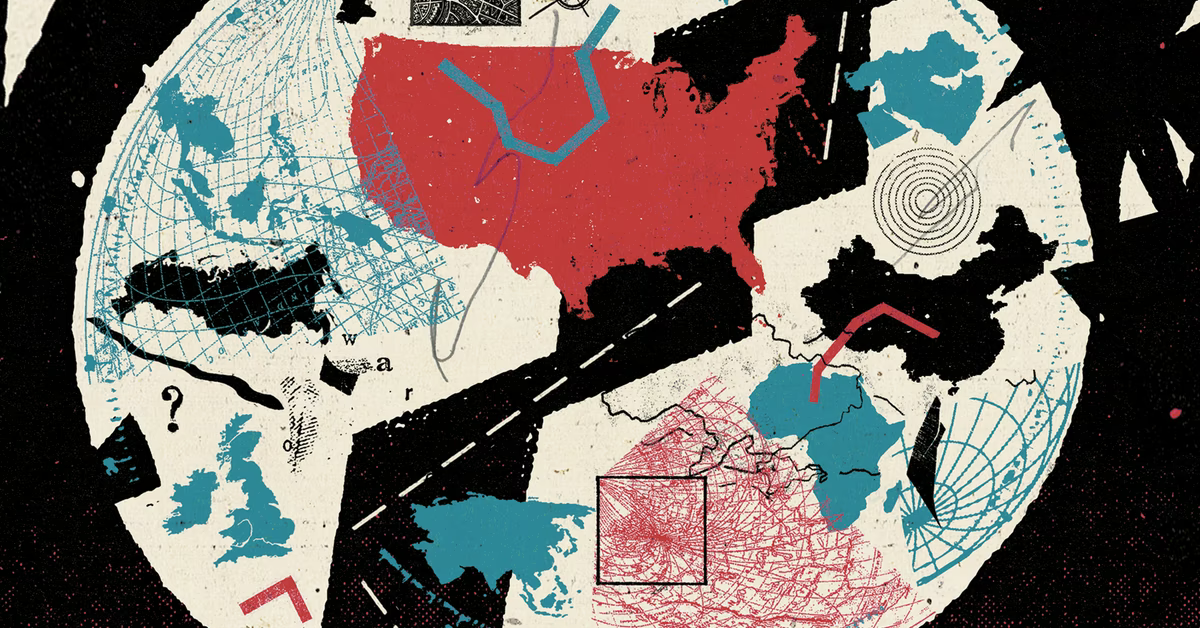
For decades, global power followed a familiar formula: resources, manufacturing, and financial dominance. That formula is now being disrupted—fast.
Artificial intelligence isn’t just another tech trend. It’s becoming the backbone of economic influence, productivity, and even decision-making at scale. And unlike previous shifts, this one is happening quietly, without clear borders.
From Physical Power to Algorithmic Power
Traditionally, countries competed on:
- Natural resources
- Industrial output
- Labor costs
Now the battleground is shifting toward:
- Data ownership
- AI infrastructure
- Talent and model development
Companies like Nvidia, OpenAI, and Google are becoming just as strategically important as oil producers or manufacturing hubs.
Why? Because AI controls how efficiently everything else runs.
The New Supply Chain Advantage
AI is already reshaping global supply chains—making them faster, leaner, and more predictive.
Instead of reacting to demand, businesses can now:
- Forecast disruptions before they happen
- Optimize logistics in real time
- Reduce operational costs using automation
This shift mirrors what we’ve seen in trade relationships like the one explored in —where efficiency, speed, and predictability define competitive advantage.
But AI takes it further: it removes friction at scale.
A New Kind of Economic Influence
AI doesn’t just improve businesses—it changes who leads.
Countries and companies investing heavily in AI ecosystems are gaining:
- Faster innovation cycles
- Stronger digital economies
- Higher productivity per worker
This creates a compounding effect. The more AI you deploy, the more data you generate. The more data you have, the better your AI becomes.
That feedback loop is the real power shift.
The Rise of “Invisible Infrastructure”

Unlike traditional infrastructure—roads, ports, pipelines—AI operates behind the scenes.
Think:
- Cloud computing networks
- Data centers
- Machine learning models running 24/7
This “invisible infrastructure” is becoming just as critical as physical trade routes.
And most users never see it.
What This Means for Businesses
For companies, this shift creates both risk and opportunity.
Those adopting AI early are seeing:
- Lower acquisition costs
- Better targeting and personalization
- Faster testing cycles (especially in marketing and product development)
For performance marketers and digital operators, AI is already changing the game:
- Creative production is faster
- Testing frameworks are more scalable
- Data-driven decisions outperform intuition
The gap between AI adopters and laggards is widening quickly.
The Bottom Line
AI isn’t replacing the global order overnight—but it’s rewriting the rules underneath it.
Power is no longer just about what you produce.
It’s about how intelligently you operate.
And the shift is already underway.
Disclaimer: This content is for informational purposes only and should not be considered financial, investment, or strategic advice. Always conduct your own research before making business or financial decisions.
