

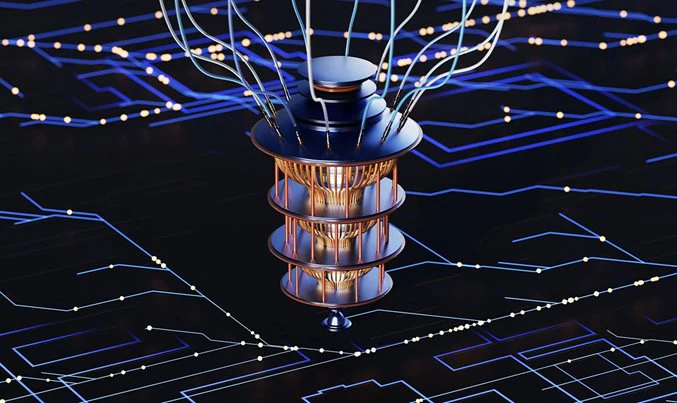
From Theory to Practice: Quantum Leap Unfolds
For decades, quantum computing existed largely as a fascinating theoretical construct — a dream of scientists seeking to transcend the limits of classical computation. The concept, born from the counterintuitive world of quantum mechanics, promised machines capable of solving problems that even the most powerful supercomputers could not handle within any practical timeframe. Now, as breakthroughs emerge from research labs and corporate innovation hubs, that dream is turning into a tangible revolution.
The progress has accelerated dramatically in recent years. Where early prototypes could only maintain fragile quantum states for microseconds, modern quantum processors achieve much longer coherence times and far higher qubit counts. Companies such as IBM, Google, and Rigetti, along with research institutions around the world, have developed increasingly sophisticated error-correction techniques and novel qubit architectures. These advancements are helping to overcome one of quantum computing’s biggest hurdles: maintaining stability in quantum bits, or qubits, which can simultaneously exist as both 0 and 1 through the principle of superposition.
Another major factor propelling the field is the rise of quantum hardware diversity. Superconducting circuits, trapped ions, photonic systems, and even topological qubits are all being explored as routes toward scalable quantum computers. Each approach has its own benefits and challenges, but collectively they represent a maturing ecosystem that points toward practical use cases rather than theoretical potential alone. Alongside these developments, hybrid systems — combining classical and quantum processors — are bridging the gap between what we can compute today and what will be possible tomorrow.
Governments and private sectors are also increasing their investment in quantum research. The European Union’s Quantum Flagship initiative, the U.S. National Quantum Initiative Act, and substantial funding from Asia have created a competitive global environment. This widespread commitment ensures not only the advancement of raw quantum technology but also the creation of crucial software frameworks and application platforms. Quantum programming languages, cloud-accessible quantum computers, and open-source toolkits are already allowing researchers and corporations to experiment with quantum algorithms remotely, democratizing access to this frontier technology.
The field is no longer just about scientific curiosity — it’s about engineering at scale. The moment where quantum computing transitions from theory to practice has arrived, and its potential to shift the balance of computational power is only beginning to be realized.
Industry Transformation Driven by Quantum Power
The practical implementation of quantum computing is already reshaping how industries think about optimization, simulation, and cryptography. One of the most immediate areas of transformation is logistics and supply chain optimization. Classical computers are astonishingly powerful, but they struggle with certain combinatorial problems — situations where the number of potential solutions grows exponentially. Quantum computers, with their ability to evaluate multiple states simultaneously, can handle these tasks in far more efficient ways. Companies in transportation, manufacturing, and finance are exploring quantum algorithms to design optimal routes, reduce costs, and manage materials more efficiently.
In materials science, quantum computing promises to revolutionize product design and energy research. Chemists and physicists can now model molecular and atomic interactions at an unprecedented level of accuracy. Simulating complex molecules — a process nearly impossible for traditional machines — can lead to new drugs, advanced batteries, and stronger, lighter materials. Pharmaceutical companies have taken particular interest in this capability, as it offers a faster path to discovering potential therapies and reducing the staggering costs of drug development.
Financial institutions are also embracing quantum technology for portfolio optimization, risk analysis, and secure data transmission. In an industry that processes vast quantities of data and relies on predictive modeling, quantum computing offers new possibilities for managing uncertainty and improving decision-making. The cryptography sector, meanwhile, is preparing for the era of “quantum advantage,” when quantum systems will outperform classical encryption methods. This has prompted intense research into post-quantum cryptography — encryption algorithms capable of withstanding attacks by future quantum machines.
Moreover, quantum computing’s impact extends into artificial intelligence and machine learning. Quantum-enhanced algorithms can potentially handle massive data sets more elegantly, training models in less time and with higher efficiency. The interplay between quantum computing and AI could define the next great frontier in technology, allowing for the creation of systems that can recognize patterns or make predictions far beyond current capabilities.
However, alongside the optimism lies realism. Widespread commercial use of quantum computing still faces challenges — from scaling qubit numbers without losing stability to minimizing error rates and enormous hardware complexity. Yet even partial breakthroughs are profoundly valuable. The rise of quantum-inspired algorithms, which use principles borrowed from quantum theory but run on classical computers, demonstrates how research in this field is already producing practical benefits across industries.
In essence, the quantum computing revolution marks a pivotal shift — not a distant prospect, but a rapidly developing reality. Businesses and scientific communities alike are moving from exploration to application, guided by tangible progress rather than speculation. As the world’s first generation of functional quantum computers begins influencing research, production, and competitive strategy, industries are discovering that what once seemed an abstract possibility has truly entered the realm of real-world innovation.
Quantum computing no longer belongs to the future; it defines the next era of intelligent technology. Its breakthroughs are not only changing how we compute — they are transforming how we imagine what’s possible.
